Tuesday, March 25, 2014

Birding in Hammonasset - First Outing with the new Camera!

 So as the title says, my dad and I went to Hammonasset Beach State Park on Sunday morning. We saw many birds, even a lifer here and there. I was hoping to get some Snow Buntings, since they had been sighted. So we set off for Hammonasset Beach.
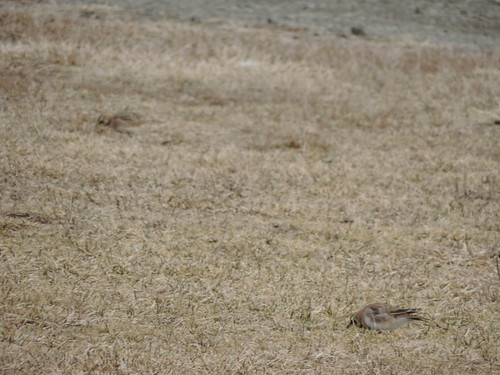
 It was an hour-long drive from where I live, but it was worth the drive. As soon as we pulled up, we saw a small flock of Horned Larks, a lifer for the day.
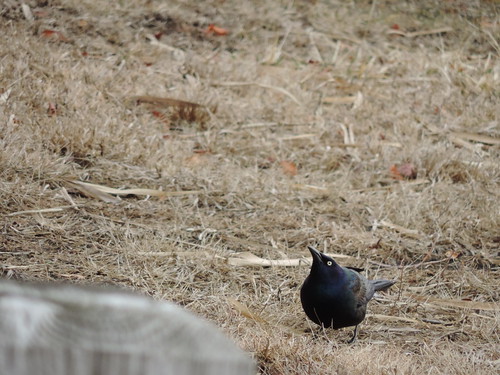
 This was also the first picture with my new camera. Even just on the drive up we saw all kinds of sparrows, blackbirds and gulls. I knew it would be a good day. As soon as we started walking we were flooded with crows, grackles, and Red-winged Blackbirds. They were everywhere throughout the park, and here are some of the photos.
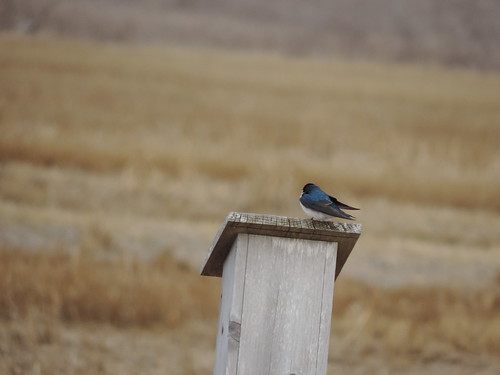
 So, we continued walking, As we went, we saw a Tree Swallow, another year bird. They were here early, and it was good seeing them for the first time. They seemed very cold, though. I guess they just weren't ready for that morning CT wind! (That would make two of us. I was also very cold.) We kept walking and saw more blackbirds and such, and they were very loud. We took a short detour, and we saw some doves and cardinals. Not many good photos came out of it though. All the photos are on the bottom of the post.
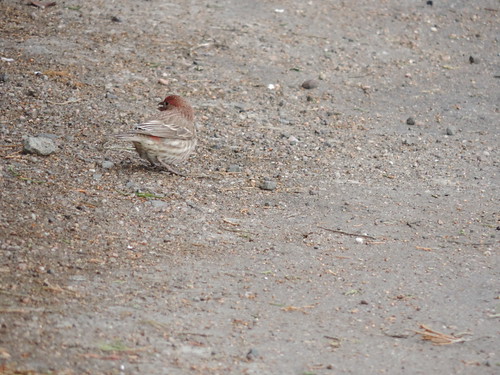
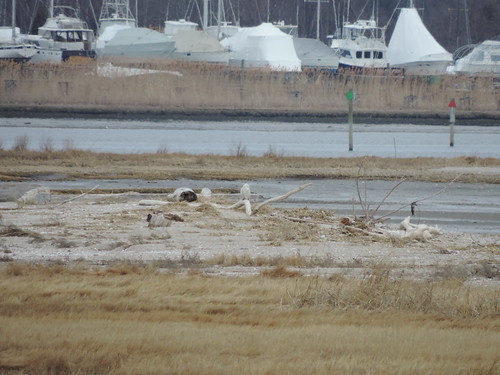
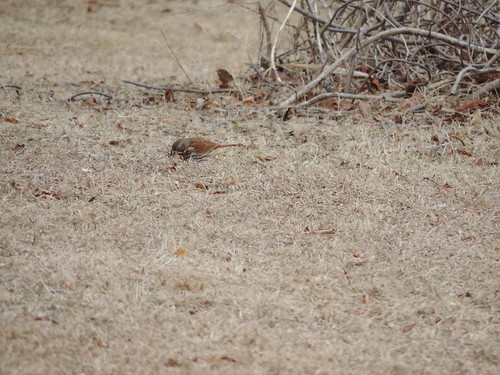
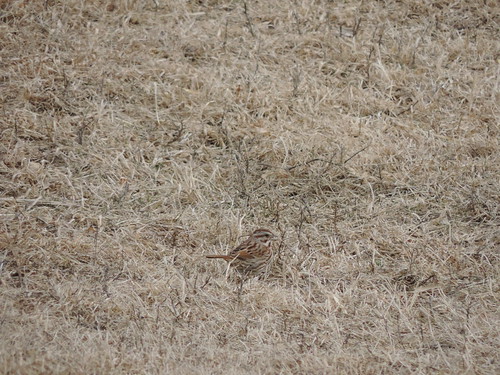
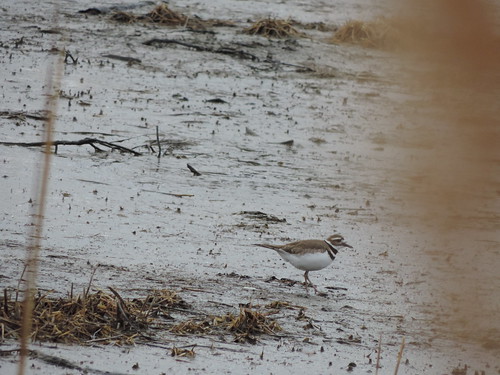
 However, we did hear some good news. We were looking at Song, Swamp and Fox Sparrows (the latter two are yearbirds) along with Purple and House Finches (yearbirds as well). There were also some blackbirds, Brown-headed Cowbirds and robins. Someone said that there was a Snowy Owl sighting at the boardwalk! Of course we wanted to see it! We went out there, and while seeing some Killdeer as well, we got a bad view of it. It was very far away, but it was there! I was excited to see it.
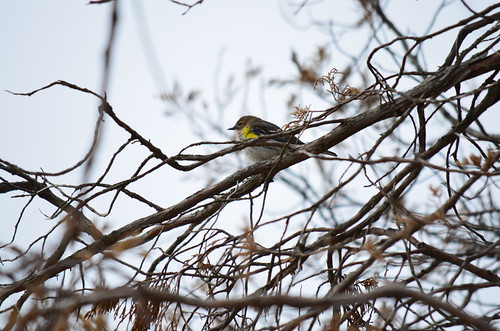
 After that, we saw a Yellow-rumped Warbler, which was very hard to photograph. Worse yet, my camera ran out of battery right about then! I will always remember to charge it from now on. So we decided to run back to the car, drop it off, and go see the beach.
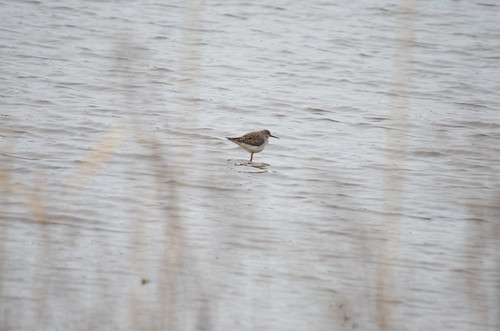
 As we went to the beach we saw some Lesser Yellowlegs and some more crows. We saw lots of gulls (mainly Herring) on the beach. We also saw some black-headed gulls in the distance, but it was too inconclusive to identify. Even though the Bonaparte's Gull was most common in Hammonasset at this time, I didn't want to be assumptive and add it, because it would be a lifer. So I just called it Laughing Gull in my personal list and said gull sp. on eBird when I reported it. We also saw some Mallards and Black Ducks in the ocean, and a quick flyby of Red-breasted Mergansers. At the end of the point we turned around and headed home.
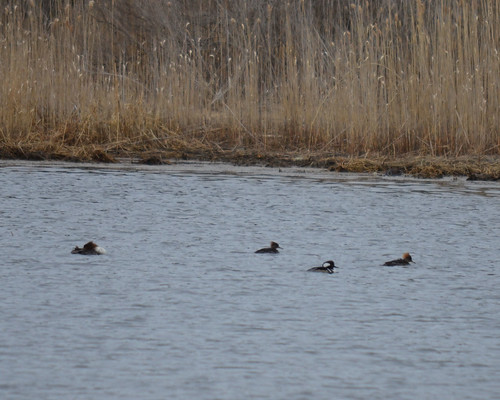
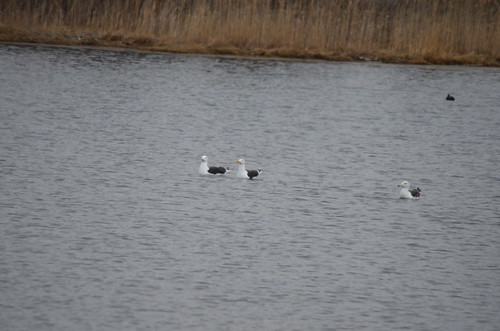
 Well, we didn't go home just yet. We went to another area in the park, still in search of the Snow Bunting. We did see some Hooded and Common Mergansers (that completes the merganser trifecta!) as well as some Great Black-backed Gulls (yearbird). After a quick look at more Mallards and some Canada Geese, we went home. We didn't see a Snow Bunting but I had a great time birding. Also, I did check Horned Lark off my life list, as well as adding ten yearbirds!
Photos:
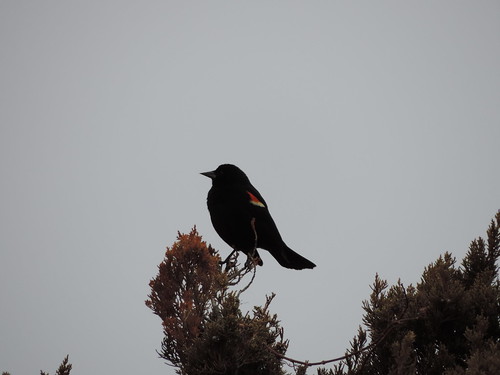
Red-winged Blackbird

Horned Larks
Horned Lark - Lifer
Merganser Group Shot
Hooded Mergansers and Common Merganser
House Finch
House Finch
Snowy Owl
Snowy Owl
Common Grackle
Common Grackle
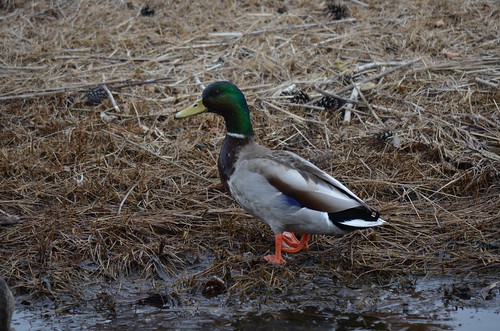
Mallards
Mallard
Tree Swallow
Tree Swallow
Great Black-backed Gulls
Fox Sparrow
Fox Sparrow
Lesser Yellowlegs
Lesser Yellowlegs
Song Sparrow
Song Sparrow
Killdeer
Killdeer
Yellow-rumped Warbler
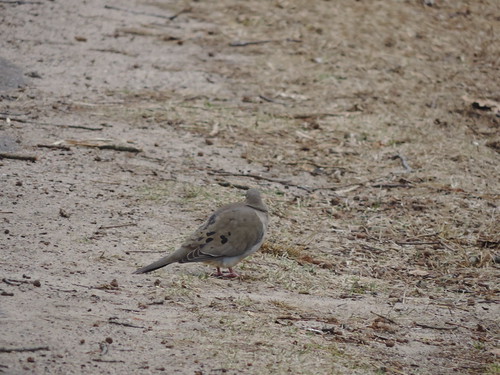
Mourning Dove
Mourning Dove
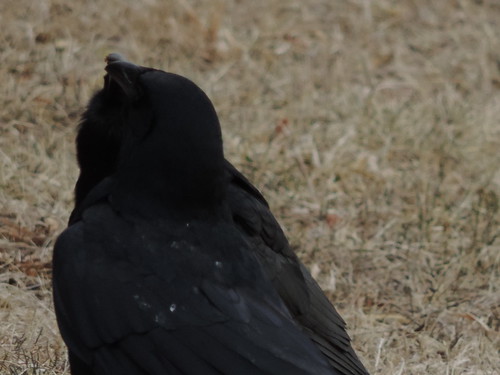
American Crows
American Crow
That's all for now. Thanks for looking.

Saturday, March 22, 2014

New Camera!

Today I am getting a new camera just for myself. Usually I use my dad's camera for picture taking, and most of the time he just takes all the pictures. But I am getting a camera for myself and it's a Nikon P510. I am very excited, and other birders are saying it's the best camera in my price range. I have been saving up money for like three years waiting for this camera. I am gonna get it some time today, and I will go birding tomorrow and get some nice pictures with it. I will most likely post those tomorrow too.

Sunday, March 2, 2014

Birding in Hartford

Today, on Sunday, I took a short drive out to Hartford, about 30 minutes away from my house in eastern CT. My dad and I went to the Riverside Park, and even though it was cold some of the water was unfrozen and there was some good birding there.

We came in and saw a Northern Flicker, but it flew away too quickly to get a photo. When we got out of the car we would hear crows galore, and they were easy to see! There had to be 150 crows there, and they were very loud the whole time.
 These crows were some of the many crows that were in the trees, and there were many different individuals. Some of them were standing on the ice, and some were in the trees. But wherever they were they were calling loudly.
There were also some seagulls there. I didn't get any good photos, but I did get some. They are on Flickr, and the link is on the bottom of the post. I actually don't know what it is, but I am believing they are Ring-billed.
Tufted Titmouse

We saw some ducks in the distance, but had no idea what they were. So we went closer, and it actually yielded some other sightings. More crows, of course, and we saw some songbirds in the woods that we went by. We saw a Tufted Titmouse, a Northern Cardinal (no picture), we heard a Black-capped Chickadee, and we even saw a Downy Woodpecker in the trees, pecking. We also spooked some Mallards, who flied away quickly. I kinda stink at getting flight shots but I tried to get some.
Downy Woodpecker
The highlight however, was a flight picture. It was a juvenile Bald Eagle, which was something we were aiming to see the whole time. It was in flight, and since it was just soaring very slowly I could get a good picture. One of them is below, in flight. It was great to see the Eagle, which even though it isn't a lifer, is always a delight to see. We looked for the adult bird but we couldn't find it. We saw a quick view of a Red-tailed Hawk flying away, but we couldn't get a picture of it. But the eagle was certainly a highlight.
Juvenile Bald Eagle
So soon we got to a place where we could see the ducks that were just a dot on my vision a while away. One was a Brant, all by itself in the river. When I reported the sighting to eBird I found out that that Brant was the first Brant sighting ever reported to eBird! I was very excited when I found this out. We kept going (this is when I heard the Cardinal and then saw it, but we couldn't get a picture), and we found out the other birds were Common Mergansers. It isn't a life bird, but it's still a good sighting. We walked back, took some more crow pictures, and saw a small group of Canada Geese on the way out. Later we saw robins, starlings and pigeons too. But it was certainly great to see the eagle.

To see more of the photos: 
http://www.flickr.com/photos/100012535@N07/sets/72157641775733483/
To see all my photos on Flickr: http://www.flickr.com/photos/100012535@N07/


Saturday, February 15, 2014

Great Backyard Bird Count!

Birding is always a lot of fun. I go whenever I get the chance. But this weekend provides a special reason to go birding: the Great Backyard Bird Count. This count (unlike the tedious and annoying Christmas Bird Count) only requires an eBird account (http://ebird.org/content/ebird/) and a little birdwatching. It is a fun way to contribute your findings to the world of ornithology. People from around the world contribute to this count. It is easy, free and fun! Learn more here and good luck birding.

Sunday, February 9, 2014

Great Bird Websites!!!

Great Bird Websites and other cool stuff

There are a lot of cool bird websites for all kinds of bird lovers all around the Internet. Here are some that I have found that will amaze you.

Image sites

http://antpitta.com/ - Antpitta.com is a great birding website for South American photos. This site, which often has updates from the creator's new trips, is a great source for some of the most diverse bird areas on Earth. There are also some non-Neotropical bird pictures. All the photos are great and the species variety there is magnificent.

http://orientalbirdimages.org/  - Oriental Bird Images is a lot like antpitta.com except all the birds there are from, you guessed it, the oriental region. Unlike antpitta, where there is only one contributor, many people add their amazing photos to the site. There are many, many cool bird pictures to observe each day. You can even look at new species that have been recently uploaded to the site. It is usually a hotspot for new species as well as amazing Asian bird pictures.

http://ibc.lynxeds.com/ - The Internet Bird Collection features all kinds of birds from everywhere. Anybody with a free account can upload their photos of birds (even I have an account) and each photo is magnificent. Their database includes over 100,000 bird photos spanning over 9,000 bird species (about 91% of all living birds), as well as over 80,000 videos and over 10,000 sound files. The videos show  a lot about bird behavior and are a great way to learn about birds right from your computer.

http://www.arthurgrosset.com/ - Arthur Grosset's bird website, while focusing mainly on Neotropical birds, has a lot of photo variety featuring birds across the globe. You can also view some of the sound files that he has captured. His collection of species is rather impressive, as are all the great photos he has collected. If you want some info about the bird you're looking at, you can always read the informative couple of paragraphs he writes about most of his sightings.

http://vireo.ansp.org/ - VIREO, or Visual Resources for Ornithology, is another great collection that has birds from all over the world by many different photographers. It has over 160,000 photographs of over 7,000 species and is always growing with each helpful contribution. The search tool allows you to search by common or scientific name, and you can even browse the birds by family.

http://www.arkive.org/birds/ - Although this is a website for all animals, ARKive's bird sector includes great photos of some of the world's rarest birds. Not only that, but it also displays well-known and common birds that are worth a second look. Even though they don't have many species each photo is a lovely look at a bird that may be hard to see in the real world.

Info websites

http://www.birds.cornell.edu/Page.aspx?pid=1478 - You can never go wrong with the Cornell Lab of Ornithology. Their website has a lot of info on how to tell apart some of the North American birds, and it also goes over general birding topics that every birder should know or understand. As you will see from the front page, there are so many things you can do on this site, from reading the Annual Report to interactive quizzes and games that increase your birding IQ.

http://www.birdforum.net/opus/Welcome - The BirdForum Opus is a great source for bird info and pictures. With an account you can also make your contribution, as well as talking with fellow birders on the forums. Even without an account you can learn about all kinds of birds, as well as locations across the world where birdwatching is the main focus. Just by clicking on the Random Page link you can see a new bird that you may have never heard of before. You can learn a lot here.

http://www.birdlife.org/ - BirdLife International is a site mainly based on concern for the world's bird species. Many of the articles on the front page talk about the state of rare species. If you go to the Data Zone after hovering over science, you can look at profiles for each species. You can even see the estimated populations and ranges of every bird species, as well as a lot of good info about the species' status and future.

http://birds.audubon.org/ - The National Audubon Society focuses on birds, and their website is astounding. It has pages for each bird in North America, set up somewhat like Cornell's pages, with more beautiful bird photos. There is also a section for bird conservation, which heavily interests me as well as many other bird lovers across the world. You can also find ways to participate in citizen science and get out in your community.

http://avibase.bsc-eoc.org/avibase.jsp?lang=EN - Avibase is a great website for checklist comparison, as well as finding out the birds of any area. Its checklist page includes lists of birds from every corner of the world, including small regions of each country. Avibase also provides information about the different ways birds are taxonomically organized in checklists, so you can easily compare different checklists.

Sound websites

http://www.xeno-canto.org/ - Xeno-canto is a great place to listen, research, and download sounds. They have over 160,000 sound recordings, spanning nearly 9,000 species. When you reach a species, you can look at the sound in detail, being able to view the location the sound was viewed, the length of the sound, and extensive details about the sound. You can also download them for free.

http://avocet.zoology.msu.edu/ - The Avian Vocalizations Center, or AVoCet, is another enormous database of bird sounds from across the world. Brought to you by Michigan State University, you can easily browse bird species and listen to their sounds. Once you find a recording you can look at many details, including location, elevation, and confirmation of the bird's ID. You can also download the sound for free, as well as the graphic sound analysis, in picture form.

http://macaulaylibrary.org/ - The Macaulay Library, from Cornell, has many bird sounds. There are some extra features for this website, however. Some of the files stored here are videos of the bird making a sound, which is a unique feature of the three websites. You can view the sound and with QuickTime, you can take part in extra analysis with Cornell's Raven Viewer. You can also download guides that include sounds, including the Cornell Guide to Bird Sounds: Master Set for North America. However, these wonderful sound files are not for download.

Bird feeder cams

http://sabalpalmsanctuary.org/feedercam/ - This live feeder cam, set in Brownsville, Texas (on the eastern Rio Grande Valley), shows a sample of birds from one of North America's most diverse bird areas. I have actually been to this spot and seen the bird cam there, and the site is an amazing place to see birds. Common birds there include Green Jay, Plain Chachalaca, White-tipped Dove, and Northern Cardinal. You can also see a raccoon if you are lucky!

http://www.ornithos.com.br/live-cams/ - This website includes many bird cams from Brazil, and although I don't know all the birds there, there is a lot of variety. Since there are five total cams, at least two or three are on consistently, and since they are set in the rainforest, there are almost always birds there. Common birds on these cams include Palm Tanager, Brotogeris parakeets, Green-headed Tanager and Speckled Chachalaca.

http://www.allenbirdcam.com/ - The Allen BirdCam is set in Pretoria, South Africa. It has a feeder which almost always includes many birds feeding. When I am watching this cam I feel like I am in South Africa. Too bad I can't add those birds to my life list! Common birds there are Cape Turtle-Dove, Southern Masked Weaver and Grey Go-away-bird. You can also view more common species at the website. At night, you can sometimes view genets and bushbabies as well!

http://cams.allaboutbirds.org/ - Yet another facet of the amazing Cornell Lab Website is the set of live feeder cams. In different seasons different cams appear, but birds including albatrosses, hawks, ospreys and the two FeederWatch cams, in Ontario and Ithaca. You can commonly view Pine Grosbeak and Evening Grosbeak in Ontario, and Mourning Dove, Blue Jay and Mallard in Ithaca. Ithaca is another place I have been, set in the Cornell Lab's visitor center.

Other websites

http://www.whatbird.com/ - Whatbird is one of my favorite bird websites ever. It includes an online bird guide for North America, with great drawings and lots of information. It is straight from the mobile app iBird, which in my opinion is the best mobile bird app. You can also view the forums, and with a free account you can reply and meet other bird lovers online. If you have a bird you don't know, post it there and you can find out what your bird is. You can also vote on polls, participate in quizzes, or just talk about birds with other members.

http://ebird.org/content/ebird/ - eBird is a well-known website where you can report your bird sightings and help contribute your findings to citizen science. You can do much more than that, however. You can explore data from already submitted checklists, look at bar charts for a specific location (they are also available for download), and explore hotspots with the new Hotspot Explorer tool. There is also a live submission map that shows when checklists are being submitted by the second.

http://www.hbw.com/ - I decided to save the best for last. The Handbook of the Birds of the World is by far the best of these bird websites. Although it is the most expensive (a basic one-year subscription is about $30) it includes amazing drawings and information from the Handbook of the Birds of the World series. You can also look at Internet Bird Collection photos from the website, look at organized plates of species, and look at news updates about birds. I highly recommend purchasing it.

Sunday, November 3, 2013

Similar Species: The Empidonax flycatchers

Oh boy, this oughta be good...
From top left clockwise: Yellow-bellied, Willow, Least, Cordilleran, Pacific-slope, Alder, Acadian, Hammond's, Gray, Dusky
The Buff-breasted Flycatcher isn't included due to the fact that it's different from the other Empidonax species.
This is my 3rd blog update, and it's about some of the most confusing species in the United States: Empidonax flycatchers. These ten species are olive-colored birds that are fond of forests and deep, wooded areas. They are all very similar, but they have slight differences across their bodies, along with their sounds being different.
Yellow-bellied Flycatcher (Empidonax flaviventris)
Okay, let's start off nice and easy. In the east, this flycatcher is the only one with yellow underparts, distinguishing it from Least, Alder, Acadian, and Willow. However, the two Western Flycatchers (Pac-slope and Cordilleran) also are yellowish under. It has a stubbier bill and head, and the yellow in the belly is brighter and there is more of it.
Acadian Flycatcher (E. virescens)
This bird is only found in the eastern US. It is larger and greener than any other empid. It is most similar to the Alder and Willow Flycatchers, but its green is a lighter shade with more hue. It is much larger and greener than the Least Flycatcher. Its call, a very fast pee-dzee call.
Alder Flycatcher (E. alnorum)
This bird is very similar to the Willow Flycatcher. It lives in moist thickets unlike the Willow Flycatcher's habitat of brushy areas. Its sound is also different, a fee-bee-o instead of the Willow Flycatcher's fi-beew. It is a plain, olive-colored flycatcher that is distinguished from the Least Flycatcher by having a less prominent eyering.
Willow Flycatcher (E. traillii)
This bird is similar to the Alder Flycatcher, as mentioned before. It is only told apart by voice. Acadian and Yellow-bellied Flycatchers are brighter, while the Least Flycatcher has an eye ring. In the West, most other flycatcher (besides the Gray Flycatcher) have eye rings to tell them apart.
Least Flycatcher (E. minimus)
The Least Flycatcher is the smallest of the Empidonax flycatchers. Its large eyering distinguishes it from the other Eastern flycatchers. It is much greener than the Hammond's and Gray Flycatchers. They have a white belly that also distinguishes them from the other emipds. Their call is a chee-bee! Its bill is also shorter than any eastern empid.
Hammond's Flycatcher (E. hammondii)
The first empid endemic to the western US, the Hammond's Flycatcher is a small, grayish flycatcher with a huge eyering. It has a gray head and a greenish body. It is very similar to the Gray Flycatcher except it has green on the lower body. It also has more dark on the lower mandible than the other empids. Unlike a lot of empids, the call is a one-syllable peek.
Gray Flycatcher (E. wrightii)
This bird is the plainest and grayest of all the empids. It is very similar to the Hammond's Flycatcher. However, it is much grayer and lighter-colored. It is also larger than the Hammond's and Least Flycatchers. While most flycatchers are greener and darker colored, some birds may appear lighter in the field.
Dusky Flycatcher (E. oberholseri)
This one closely resembles the Gray and Hammond's Flycatchers. However, the Gray is a bit lighter, and the Hammond's is slightly smaller and darker. Its downward tail-bobbing is distinctive among empids; never take behavior out of the equation when ID'ing birds. Its main call is a pir-EET sound. Its call, like the other empids, is the main way to tell it apart from others.
Cordilleran Flycatcher (E. occidentalis)
This bird is darker on the belly than most empids. It and the Pacific-slope Flycatcher are probably the hardest to tell apart in their small range intergrade. They were formerly known as one species, the Western Flycatcher. The Pac-slope Flycatcher is slightly smaller and darker, but it is hard to tell in the field. Most of their ranges are separated, but the pi-PEET call is different from the Pac-slope's three-syllable call.
Pacific-slope Flycatcher (E. difficilis)
Buff-breasted Flycatcher
Lastly, this one is very hard to tell apart from the Cordilleran Flycatcher. Its three-syllable call is the main way to tell the two apart. It is also slightly smaller and darker. It is extremely similar so you can just hope that you are not in the small range intergrade where they both live. Most people aren't but it is still somewhat useful to know the small tips for telling them apart.
Other Similar Species
Buff-breasted Flycatcher (E. fulvifrons) - This empid is structured the same, but it is smaller and, as the name would suggest, more buffy. It is only found in southern Texas, however. It is the only  American empid not mentioned above.
Northern Beardless-Tyrannulet
Northern Beardless-Tyrannulet (Camptostoma imberbe) - This bird is much more plain than the others, but sometimes variation causes a yellow belly. It is much grayer than others and its range only occupies the southern areas of the United States. Its range also goes down to Central America.


Hutton's Vireo
Vireos (Vireo sp.) - The vireos are the closest relatives to flycatchers in the US. The Hutton's Vireo is the most similar, but the head shape is different. The flycatchers also exhibit tail-bobbing and different behaviors. The vireos, for the most part, are also paler and the calls are different.

New BirdTrax gadget!

Sorry I have been away for a while, school has made it hard to make a new post. However, I have made a cool update to the blog.

I have a BirdTrax gadget on the side of the screen. BirdTrax is a new gadget that shows rarities, sightings, and eBird checklists of birds in your area. However, this is only for my area, which is around eastern Connecticut. I hope to use it to see rare birds and go to good places (you know, when the weather gets better). Anyways, I hope you enjoy it even if you don't live in CT. If you want one to, it is free and somewhat easy to install. If you have a blogger, you can get one by clicking on this link: http://www.birdventurebirding.com/2013/01/birdtrax-website-embedder.html. If you don't, use the description below to install on Google Site. Note: you will need to enter your latitude and longitude for each way. Unless you know it already, here is a good website for easily finding it:http://mynasadata.larc.nasa.gov/latitudelongitude-finder/You will need a Google account for both options.

Installing on blogger

Click on the link above. When you enter all the specifications, a code will appear on the bottom of the screen. It should be very long; you will need to use it later. Type "blogger.com" in a new tab on your browser. You should see your blog. On the little arrow next to the post list, click on it and scroll down on the options. Click on "Layout". Then, you should see something that kinda looks like your page. Find a place where you can add a gadget (a link that says "Add a gadget") and click on it. In Basics, scroll down until you see "HTML/JavaScript". Another window should pop up. Enter your title (something like BirdTrax gadget) and paste the code from the website into the "Content" box. Then, click "Save". Then, click the orange "Save Arrangement" button on the header above the layout page. A yellow window should pop up saying, "Your changes have been saved." with a "View Blog" link next to it. Click on "View Blog", and you should see your gadget there!

Installing on Google Sites

First, go to https://sites.google.com/. Click the red "Create" button on the left side of the site. It will let you choose a template and a name, but you can choose whatever you want. Make sure to type the code thingy on the bottom. Then, click on the red "Create button on the header. Make sure the URL you want is available; you can change it without changing your name. You should have a blank page. Click on the pencil button on the top right to edit the page. You should have another blank page. On the top right, click on "Insert", and then click on "More gadgets..." It should be in the bottom of the second column, with three dots as the icon on the left. You should get another window. On the left side, click on the option that says "Add gadget by URL". Enter this link in the box: https://birdtrax-explorer.googlecode.com/svn/trunk/birdtrax.xml. Make sure to delete the http:// that automatically appears in the beginning. Click "Add". Then, customize your gadget for however you want. Make window size (375x450). Also check "Include a scrollbar on gadget when necessary". Then, click OK. You should see a grey box that says "Google Gadget" on it. Then, click "Save". You should have your gadget up on the site!

Thanks for reading those tedious instructions (if you did). I hope you like the BirdTrax gadget. If you have any problems downloading it, leave a comment here.